The Best Healthy Coffee Brewing Guides — Maximize Every Cup
How you brew coffee affects its flavor, antioxidant content, and acid level — dramatically. Different brewing methods extract different compounds from the grounds, and the wrong technique can undermine even the best low-acid coffee. When you start with Puroast's patented low-acid base (pH 5.7–5.9, verified by independent research), the right brewing method can maximize antioxidants, minimize bitterness, and deliver a cup that's genuinely gentle on your stomach. This guide covers every major brewing method — what it does to your coffee, who it's best for, and how to get the most out of Puroast's unique roasting chemistry.
⚠️ The Science Is Clear: Studies have NOT shown that reducing caffeine directly decreases acid reflux symptoms. Lower acid intake — measured by pH — definitively helps. This is why starting with a genuinely low-acid coffee (pH 5.7–5.9) matters more than switching to decaf, which has the same acidity as regular coffee. (Moon, Yoo & Shibamoto, JAFC 2009)
|
5.8
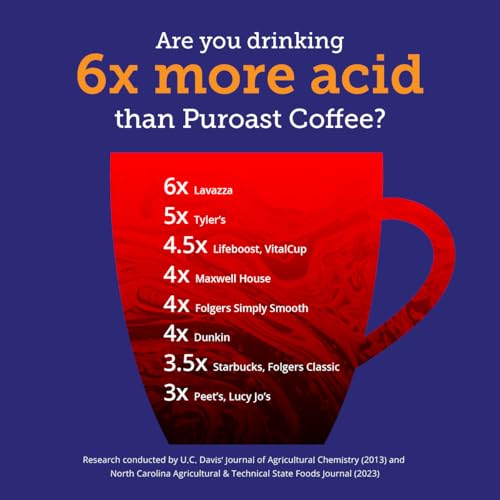
Puroast pH — vs. 4.7 in standard coffee
|
|
7X
More antioxidants than leading brands
|
|
98%
Antioxidant activity at optimal roast temp
|
French Press — Maximum Antioxidants
French press is the gold standard for antioxidant extraction. Because no paper filter is used, the natural oils and polyphenols from the coffee grounds pass directly into your cup. For Puroast, this means you get the full benefit of the 7× antioxidant advantage documented in the UC Davis Shibamoto research — nothing filtered out.
How to brew: Use a coarse grind. Heat water to 195–200°F (just off boiling). Add 1 tablespoon of grounds per 4 oz of water. Pour, stir gently, and place the lid on with the plunger up. Steep for exactly 4 minutes, then press slowly and pour immediately. Do not let it sit — the grounds continue extracting and will increase bitterness and acidity.
Best for: People who want maximum antioxidant content. Those with IBS or sensitive stomachs should note that the oils in unfiltered coffee can increase gut motility — if this is a concern, pour over or drip may be a better fit.
Pour Over — Clean, Precise, and Smooth
Pour over is the most precise brewing method — and for Puroast, it produces an exceptionally clean, smooth cup that showcases the coffee's natural sweetness and low bitterness. The paper filter removes most of the oils, which can reduce the gut-stimulating effect of coffee for sensitive stomachs, while still preserving the primary antioxidant compounds.
How to brew: Use a medium-fine grind. Heat water to 200°F. Pre-wet the filter (this removes the paper taste). Add grounds (1:16 ratio — 1g coffee per 16ml water). Pour in a slow, steady spiral, starting in the center. Total brew time should be 3–4 minutes. The bloom pour (first 30 seconds, ~2× the coffee weight in water) is critical — it degasses the grounds and ensures even extraction.
Best for: People with acid reflux or GERD who want the cleanest, least-irritating cup. The paper filter + Puroast's low-acid base is one of the gentlest coffee combinations available. (Ibrahim et al., NC A&T 2024)
Drip Coffee Maker — Most Convenient
Drip coffee is how most Americans brew — and Puroast's ground coffee is optimized for it. A standard drip machine heats water to approximately 195–205°F and passes it through the grounds at a controlled rate. The paper filter in most drip machines removes oils while preserving the primary flavor and antioxidant compounds. Puroast's ground coffee (medium grind) is precisely sized for drip brewing.
How to brew: Use 1 tablespoon per 6 oz of water (adjust to taste). Use filtered water if your tap water is heavily chlorinated — chlorine reacts with coffee compounds and increases perceived acidity. Clean your machine monthly with a white vinegar cycle. Old mineral deposits can affect brewing temperature and increase bitterness.
Best for: Daily use, households with multiple coffee drinkers, and anyone who prioritizes consistency. The Puroast House Blend Pods are the ultimate low-acid drip convenience for K-Cup machines.
Cold Brew — The Smoothest, Lowest-Acid Method
Cold brew is chemically different from hot-brewed coffee cooled down. Because cold water extracts coffee compounds differently, cold brew naturally has lower acidity — typically pH 5.9–6.3 depending on the beans. When you cold brew Puroast, you're stacking two acid-reduction methods: Puroast's patented roasting process (already pH 5.8) plus cold extraction. The result is the smoothest, least-acidic cup possible.
How to brew: Use coarse grind. Combine 1 cup of grounds with 4 cups of cold filtered water in a jar or pitcher. Stir, cover, and refrigerate for 12–24 hours. Strain through a fine mesh strainer lined with cheesecloth or a paper filter. The concentrate can be stored refrigerated for up to 2 weeks. Dilute 1:1 with water or milk to serve. (Sulaiman, Moon & Shibamoto, JDS 2011)
Espresso — Concentrated but Lower Volume
Espresso is a high-pressure, short-extraction brew that produces a concentrated shot (1–2 oz) with intense flavor. Despite its strong taste, espresso is not significantly more acidic than drip coffee per serving — the small volume means less total acid consumed. Puroast's Italian Espresso Roast is specifically designed for espresso machines and the Aeropress.
How to brew: Use an extra-fine grind. Tamp firmly and evenly. Extract at 9 bar pressure, 190–196°F, for 25–30 seconds. A properly extracted Puroast espresso will have a rich, caramel-colored crema with zero bitterness and noticeably less acidic aftertaste compared to standard espresso.
Best for: Lattes, cappuccinos, Americanos, and anyone who loves concentrated coffee flavor without bitterness.
Brewing Method Comparison
| Method |
Antioxidants |
Acid Level |
Best For |
| French Press |
★★★★★ Highest |
Low (Puroast) |
Max nutrition |
| Pour Over |
★★★★ High |
Very Low |
Acid reflux/GERD |
| Drip |
★★★★ High |
Very Low |
Daily convenience |
| Cold Brew |
★★★ Moderate |
Lowest |
Sensitive stomachs |
| Espresso |
★★★★ High |
Low (small volume) |
Concentrated flavor |
Frequently Asked Questions
Does brewing method change how acidic Puroast is?
Yes, but Puroast starts so low (pH 5.8) that all methods produce a low-acid result. Cold brew will push it slightly higher (closer to pH 6.0–6.2). French press and drip will stay around pH 5.8. Pour over is similar.
Can I use Puroast in a pod machine?
Yes — Puroast makes House Blend and French Roast pods in 24-count boxes, and House Blend Decaf, Vanilla Nut, and Bourbon Pecan in 12-count boxes. All are compatible with standard K-Cup brewers.
Does water temperature affect acidity?
Yes. Water above 205°F extracts more acidic compounds. Keeping water at 195–200°F consistently produces a lower-acid, less bitter cup. Cold brew extracts the least acid of all — no heat means minimal quinic acid extraction.
Does grind size matter for acid?
Coarser grinds extract fewer acidic compounds (shorter extraction surface). For the least acidic cup, use a coarser grind than you normally would. This is why cold brew (coarse grind, cold water, long steep) produces the lowest-acid result of any method.
Is Puroast whole bean available for grinding fresh?
Yes — Puroast offers whole bean in several roasts. Grinding immediately before brewing maximizes freshness and antioxidant integrity. Use a burr grinder (not blade) for consistent particle size.
The Only Coffee Verified Low-Acid by Independent Science
NC A&T University (2024): Most "low acid" coffees are more acidic than regular coffee. Puroast is the exception — verified at pH 5.7–5.9.
LACCSA Certified · UC Davis Studied · Patent-Protected Roasting Process
Shop Puroast Low-Acid Coffee →
Sources: Moon, Yoo & Shibamoto — JAFC 2009 | Ibrahim et al. — NC A&T 2024 | Sulaiman, Moon & Shibamoto — JDS 2011 | Mayo Clinic — GERD
Puroast does not provide medical advice, diagnosis, or treatment. Any information published on this website or by this company is not intended as medical advice. Always consult a qualified health professional with any questions or concerns about your physical health.