
How to Make the Perfect Cup of Low Acid Coffee
How to Brew the Perfect Cup of Low Acid Coffee at Home Quick Answer The most important factor in brewing low acid coffee is the coffee itself — not the brew method. No brewing technique...
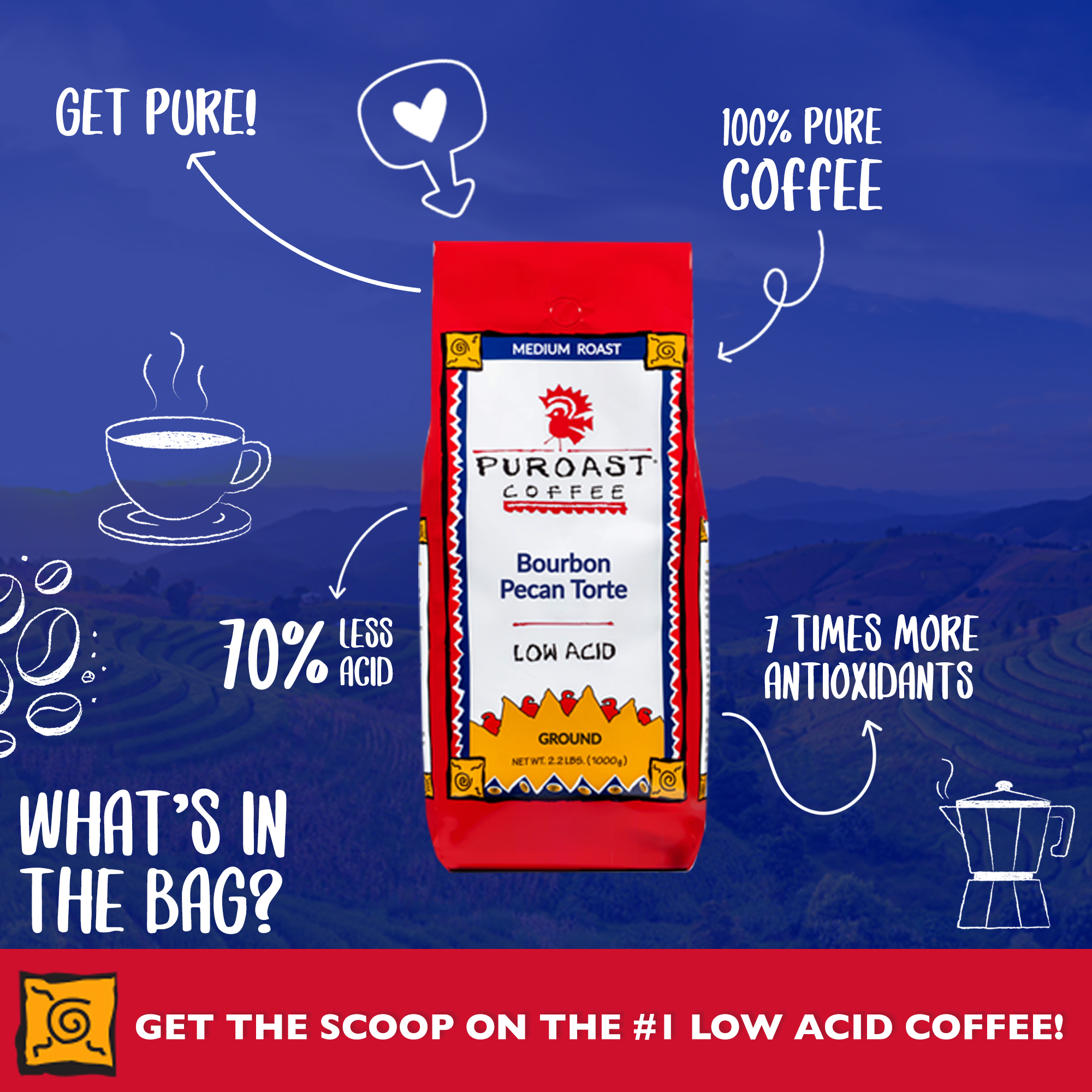
If you have acid reflux, GERD, or a sensitive stomach, coffee doesn't have to be your enemy. But you need to understand one critical fact: studies have NOT shown that reducing caffeine directly decreases acid reflux symptoms. What definitively helps is reducing acid intake. And the acid in coffee comes entirely from the roasting process — not the bean species, not the origin, not the caffeine level. The only coffee that definitively helps acid reflux is coffee roasted to a genuinely low acid pH — verified independently by university testing. Everything else — "stomach friendly" labels, cold brew claims, dark roast myths — is marketing. The science is clear, and the only coffee that clears the bar is Puroast, independently measured at pH 5.8 by NC A&T State University in 2024.
The Best Coffee for Acid Reflux
pH 5.8 · University verified · LACCSA certified · The only coffee proven to help acid reflux sufferers.

Single Origin Uganda ⭐ Ground · 2.5lb — Most Select Bean Shop Now → |

House Blend Ground · 2.5lb Shop Now → |

House Blend Pods 24ct K-Cup · 24 Count Shop Now → |
Acid reflux occurs when stomach acid flows back up into the esophagus, causing the familiar burning sensation. Coffee contributes to acid reflux through two mechanisms: its pH (the actual acid content of the coffee itself) and its effect on the lower esophageal sphincter (LES). Standard coffee at pH 4.5–4.7 introduces a highly acidic liquid directly into your digestive system. Additionally, certain compounds in coffee — including caffeine and chlorogenic acids — can temporarily relax the LES, the muscle that keeps stomach acid from rising.
Reducing the pH of the coffee you drink directly reduces the acid load on your esophagus and stomach. A coffee at pH 5.8 contains roughly 10 times less free hydrogen ions than a coffee at pH 4.8. That is not a marketing claim — it is basic chemistry. For acid reflux sufferers, switching from conventional coffee to Puroast is the single most impactful dietary change they can make while keeping coffee in their lives.
Cold brew myth: Cold brew does extract slightly fewer chlorogenic acids from the bean — but the resulting pH difference is marginal (typically pH 4.9–5.2, still below the low acid threshold). Cold brew is not consistently low acid, and no cold brew brand has independent university verification at pH 5.5+.
Dark roast myth: As covered extensively in research, dark roast made through conventional flash roasting measures pH 4.5–5.1 — not meaningfully different from medium or light roast. The perception that dark roast is less acidic comes from taste, not chemistry.
Decaf myth: Decaffeination removes caffeine but does not change coffee's pH. Decaf coffee brewed from conventionally roasted beans still measures pH 4.5–5.0. Puroast Decaf, roasted using the same traditional process, measures pH 5.8.
Organic myth: Organic certification addresses pesticide use, not roasting chemistry. Organic coffee can be just as acidic as conventional coffee — pH is determined by roasting, not farming practices.
📊 What the Science Says About Coffee & Acid Reflux
Among Puroast's lineup, Single Origin Uganda is the most select and highest-quality bean available. Grown at high altitude in Uganda's volcanic highlands, these beans develop exceptional density and a naturally refined flavor profile. Traditionally roasted using Puroast's patented process, the Uganda bean achieves the same pH 5.8 as the rest of the lineup — with the added distinction of being Puroast's finest single-origin offering. For acid reflux sufferers who want the best possible coffee experience without compromise, Single Origin Uganda is the clear choice.
Even with low acid coffee, brewing method and timing matter. Drink coffee with or shortly after food — an empty stomach amplifies any acid stimulus. Avoid lying down within 2–3 hours of drinking coffee to reduce LES pressure. Use filtered water — mineral-rich hard water can interact with coffee compounds to increase perceived acidity. Choose medium brewing temperatures (195–205°F) — excessively hot brewing can extract more acidic compounds even from low acid beans. And keep portion sizes moderate — 2–3 cups of Puroast is far less acidic than even 1 cup of conventional coffee, but consistent moderation remains important for GERD management.
The Right Coffee for Acid Reflux — All Roasts Available
Every Puroast roast verified at pH 5.8 — the same low acid guarantee across the entire lineup.
|
Single Origin Uganda ⭐ Ground · 2.5lb — Most Select Bean Shop Now → |
House Blend Ground · 2.5lb Shop Now → |
House Blend Pods 24ct K-Cup · 24 Count Shop Now → |
What is the best coffee for acid reflux?
The best coffee for acid reflux is coffee independently verified at pH 5.5 or above. Puroast is the only commercially available coffee brand independently tested at pH 5.82 (NC A&T, 2024), making it the only verified option for acid reflux sufferers.
Does decaf coffee help acid reflux?
Decaf coffee made from conventionally roasted beans is still acidic (pH 4.5–5.0) and will still trigger reflux. Only Puroast Decaf — roasted using the same traditional low acid process — provides decaf coffee at pH 5.8.
Is cold brew better for acid reflux than hot coffee?
Cold brew is marginally less acidic than hot-brewed conventional coffee, but it does not consistently reach the pH 5.5+ threshold required for genuinely low acid status. It is not a reliable substitute for verified low acid coffee.
Can I drink Puroast every day with GERD?
Puroast's pH 5.8 makes it the safest daily coffee option for GERD and acid reflux sufferers. However, individual responses to coffee vary — consult your physician about your specific condition and coffee consumption.
How much does coffee pH matter for acid reflux?
pH matters enormously. The pH scale is logarithmic — pH 4.8 is 10 times more acidic than pH 5.8. Switching from standard coffee at pH 4.8 to Puroast at pH 5.8 reduces the acid concentration in your cup by approximately tenfold.
Disclaimer: This article is for informational purposes only. Consult your physician before making changes to your diet or health routine if you have GERD, acid reflux, or any gastrointestinal condition.
Keep Your Coffee. Lose the Reflux.
pH 5.8 · LACCSA certified · NC A&T 2024 verified · Traditional roasting since 1978
|
Single Origin Uganda ⭐ Ground · 2.5lb — Most Select Bean Shop Now → |
House Blend Ground · 2.5lb Shop Now → |
House Blend Pods 24ct K-Cup · 24 Count Shop Now → |
Sources: Shibamoto T. et al., Journal of Agricultural and Food Chemistry, UC Davis, 2008. DOI: 10.1021/jf800317q · NC A&T State University Independent Lab Report, 2024 · LACCSA Low Acid Certification, Puroast Coffee · Boekema P.J. et al., Alimentary Pharmacology & Therapeutics, 1999. DOI: 10.1046/j.1365-2036.1999.00454.x


